Treatment halts aHUS recurrence after COVID-triggered relapse
Case report shows complement-targeting therapy stabilized kidney function
Written by |
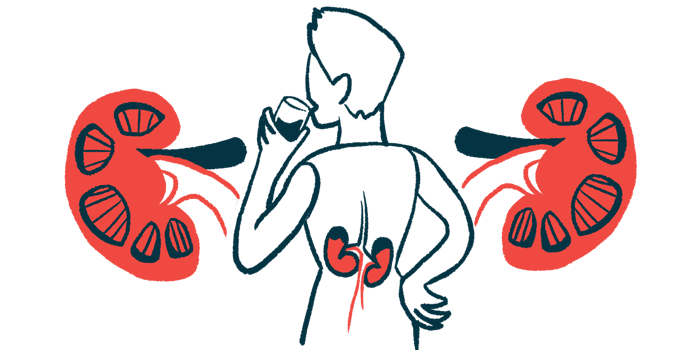




A man with atypical hemolytic uremic syndrome (aHUS) who had received a kidney transplant later developed a recurrence of the disease after testing positive for SARS-CoV-2, the virus that causes COVID-19, according to a case report.
Treatment with eculizumab — available in the U.S. as Soliris and biosimilars — led to significant clinical improvement and no aHUS recurrence reported during follow-up.
This case highlights how genetic testing and complement-targeting therapies such as eculizumab can help transform aHUS “from a severe, transplant-threatening complication into a chronic, manageable condition, ultimately improving the prognosis of high-risk patients,” the researchers wrote.
The report “Effective use of eculizumab in treating recurrent atypical HUS following renal transplantation triggered by SARS-CoV-2 infection,” was published in Frontiers in Medicine.

What aHUS is and why kidney transplants are especially vulnerable
aHUS is part of a broader category of conditions called thrombotic microangiopathies (TMAs). These disorders are marked by the destruction of red blood cells, low platelet levels (cell fragments involved in blood clotting), and the formation of clots in small blood vessels throughout the body. The kidneys are particularly vulnerable to damage in aHUS. Studies suggest that up to about 14% of patients may develop aHUS after a kidney transplant.
Certain genetic mutations increase a person’s risk of aHUS, but a triggering event— such as an infection — is usually needed to activate the complement system, part of the body’s immune response, and set the disease in motion. In kidney-transplant recipients, aHUS may return as a recurrence of the original disease or develop for the first time after transplant. Recurrent cases are considered especially high-risk because they can threaten the transplanted kidney.
Scientists in China reported the case of a 52-year-old man who developed kidney failure believed to be caused by aHUS. Three years before his kidney transplant, he had been diagnosed with TMA after showing signs of kidney damage, along with anemia (low number of red blood cells or of hemoglobin), low platelet counts (thrombocytopenia), and elevated lactate dehydrogenase (LDH), a marker of red blood cell breakdown.
Before the transplant, he received standard immunosuppressive treatment to help prevent organ rejection.
Five days after the transplant, blood tests showed reduced hemoglobin and platelet levels, along with increased LDH. Levels of C5b-9, a marker of complement system activation, were elevated, and a biopsy confirmed mild TMA.
The man underwent three sessions of plasma exchange, a procedure that removes and replaces plasma to eliminate harmful complement components, which led to clinical improvements. He was then discharged from the hospital.
Over the following three months, his condition remained stable, and a follow-up kidney biopsy showed no signs of damage.
COVID infection followed by return of aHUS symptoms
About 10 months after the transplant, he tested positive for SARS-CoV-2 and developed fever, cough, and a sore throat. A CT scan confirmed viral pneumonia. A new biopsy revealed changes consistent with TMA. Blood tests showed rising creatinine levels, indicating kidney injury, along with reduced hemoglobin and platelet counts.
“These findings, in conjunction with the patient’s clinical history and serological [blood work] results, were consistent with the diagnosis of recurrent aHUS,” the scientists wrote.
Further testing ruled out kidney rejection, a blood disorder called thrombotic thrombocytopenic purpura, and other autoimmune disorders. Genetic testing revealed mutations in the complement-related C3 and CFHR5 genes, both linked to aHUS. Based on these findings, he was diagnosed with recurrent aHUS, likely triggered by the SARS-CoV-2 infection.
The man received antiviral treatment, which cleared the infection and improved lung symptoms. Despite plasma exchange, signs of aHUS persisted.
He was then treated with eculizumab, with a four-week induction phase followed by maintenance doses every two weeks. Although maintenance therapy was discontinued after three months for personal reasons, the man showed significant clinical improvement, including normalized blood pressure, hemoglobin, and LDH levels, as well as higher platelet counts, reduced inflammation, and no recurrence of aHUS.
During more than one year of follow-up after starting eculizumab, the man maintained stable graft function, normal blood work, and no recurrence of aHUS.
Overall, this case “provides critical insights into the diagnosis and management of recurrent aHUS, emphasizing that therapeutic strategies should incorporate comprehensive genetic risk assessment and clinical progression monitoring,” the researchers wrote.
“Individualized treatment approaches based on identified genetic predispositions and triggering factors are essential for optimizing long-term patient outcomes,” the researchers concluded.